
A word from Titouan – co-founder of Globe For You: mobility
Urban mobility is at a turning point. With 73% of the world's population projected to live in urban areas by 2050, the challenges of congestion, pollution, and land management are becoming increasingly urgent. Using personal cars, especially for solo travel, is costly in many respects. That's why we're focusing on innovative mobility solutions, with cycling at the forefront, to promote a more sustainable and efficient way of living in cities. Our ultimate goal is to offer a credible alternative to the car, with all the benefits it brings in terms of sustainable mobility and improved quality of life in urban environments, without the constraints.
The goal? Replacing car use with an already developed alternative: the bicycle. But what does the bicycle lack to completely replace car use? A trunk, to be able to carry everything. The goal is to have a trunk, on a bicycle.
Our solution? A bicycle trailer, made in Brittany from flax fiber. A trailer to carry the equivalent of a week's worth of groceries for three people, plus plenty of other equipment, even pets. A trailer, but why flax fiber?
Among the fibers frequently used and valued for their mechanical properties, carbon fiber is cited first, closely followed by fiberglass. Carbon is a fossil resource whose extraction and processing methods are extremely polluting. Added to this is transportation, as it is mostly imported, and the use of carbon fiber is, in total, 100 times more polluting than flax fiber.
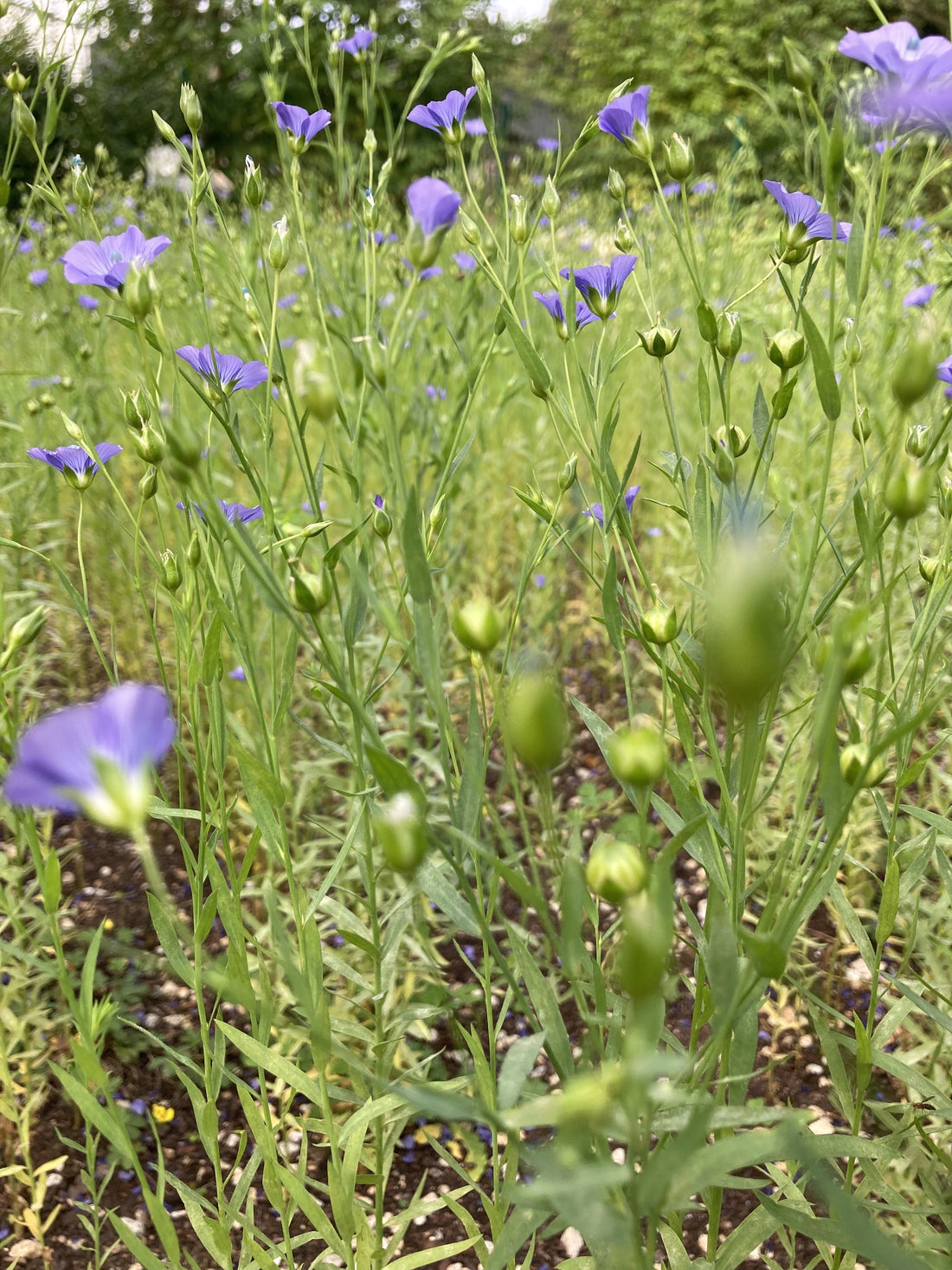
For its part, flax is a plant that grows in France and whose mechanical properties are similar to those of fiberglass.
Flax is a hollow fiber. Its cellulose content (concentration of matter) increases when the plant is cut and dries on the ground. This process is called retting, and it's what makes the plant so strong once processed. The hollow fiber provides two particular properties. First, it makes the fiber thermally insulating. This means that even in very low temperatures, the resin-impregnated fiber will be pleasant to the touch and maintain a stable temperature. To give you an idea, without the hollow fiber, it's like holding a steel pipe in the snow without gloves: it burns. This hollow fiber also provides sound insulation. The trailer easily absorbs shocks and makes no noise when it falls.
- Textile industry:
The remaining 30% is used by the textile industry. Flax cultivation requires significantly less water and energy than cotton (which is nevertheless more widely used in textiles). The insulating properties of flax's hollow fibers (as described above) allow for the production of a thermoregulating textile that provides a feeling of coolness in summer and retains heat in winter.
- Cattle feed:
THE The lower part of the plant is called tow. It is used to produce food and/or bedding for animals.
- Human nutrition:
At flowering time, small round capsules that appear as the flowers wither contain the flax seeds. Widely used in human food, flax seeds are consumed raw, ground, or as oil. Flax seeds are rich in essential fatty acids: they contain omega-3, necessary for a balanced diet.
- Energy and heating:
Flax shives, small fragments of flax straw resulting from the scutching process, are actually the outer bark of the flax plant. They can be used as fuel for heating buildings. Flax dust, through its conversion into biogas, can be used as an energy source.